
How can small and medium-sized cities become more resilient to climate change while improving biodiversity and quality of life? Nature-based solutions offer an opportunity to address these interconnected challenges, but their success depends on strategic planning, collaboration and long-term commitment.
Growing challenges for Mediterranean cities
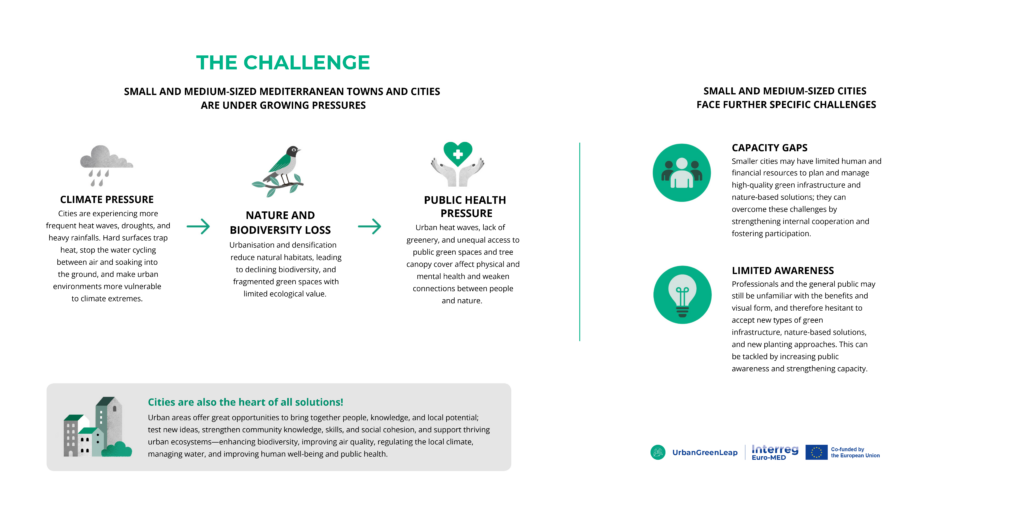
Cities across the Mediterranean are increasingly experiencing the impacts of climate change. More frequent heatwaves, intense rainfall and growing urbanisation put pressure on urban ecosystems, infrastructure and public health.
At the same time, the loss and fragmentation of green spaces threaten urban biodiversity and reduce the capacity of cities to adapt to changing environmental conditions.
Small and medium-sized cities face particular challenges, often having limited resources, technical capacities and experience to plan and manage urban green infrastructure effectively.
Nature-based solutions: Multiple benefits for cities and communities
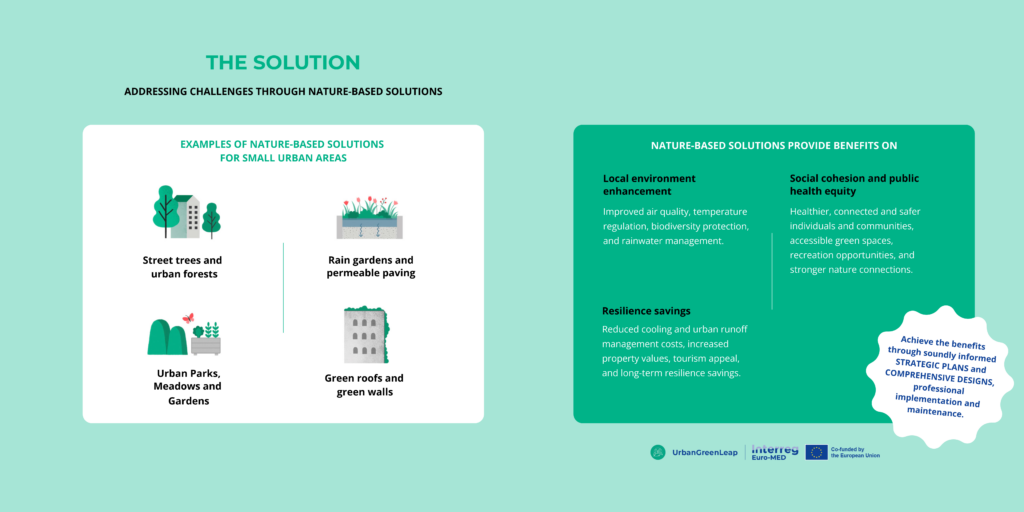
Nature-based solutions (NBS) use and enhance natural processes to address environmental and societal challenges. They can simultaneously strengthen urban ecosystems, improve climate resilience and create healthier, more liveable environments.
Urban forests and street trees, biodiverse parks and flowering meadows, rain gardens, green roofs and walls are examples of solutions that can help cities:
- Adapt to climate change by reducing urban heat and improving stormwater management.
- Support biodiversity by creating and connecting habitats for plants and animals.
- Improve public health and well-being by providing cooler, healthier and more attractive public spaces.
- Strengthen urban resilience by supporting ecosystem functions and reducing climate-related risks.
However, implementing individual green interventions is not enough. To maximise their benefits, nature-based solutions need to become an integral part of urban planning and management.
From planning to implementation: Resilient cities are built together
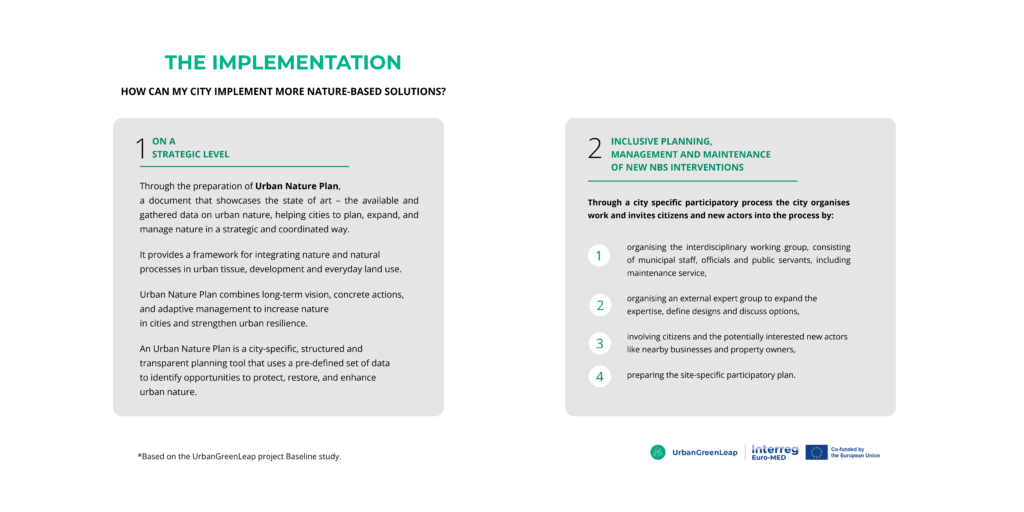
Successful urban greening requires an integrated approach that combines scientific knowledge, strategic planning, public participation, investment and continuous care.
Cities need to understand their existing green infrastructure, identify opportunities for improvement and develop long-term objectives. Equally important is involving residents and local stakeholders in designing, implementing and managing urban green spaces.
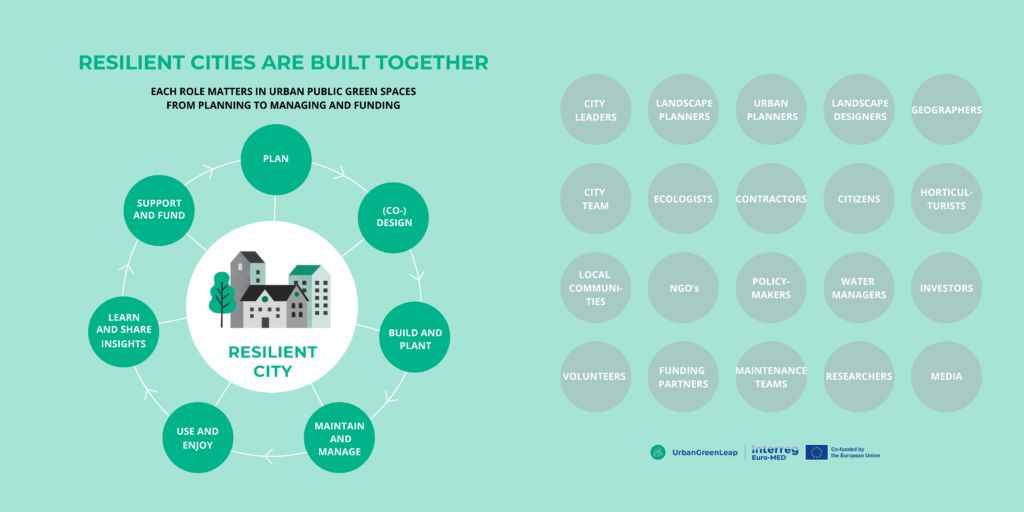
Through the Interreg Euro-MED Programme, UrbanGreenLeap supports small and medium-sized Mediterranean cities in developing Urban Nature Plans, strengthening local capacities and testing nature-based solutions through pilot activities.
By bringing together municipalities, experts and local communities, the project aims to turn knowledge and shared ambitions into practical approaches to greener and more resilient cities.
Explore our infographic
What challenges do Mediterranean cities face? Which nature-based solutions can help? And what does it take to implement them successfully?
The infographic below, Nature-based Solutions in Small and Medium Cities, provides an overview of the challenges, benefits and key steps towards sustainable urban greening.
Explore the infographic below and discover how resilient cities can be built together.
INFOGRAPHIC OF NBS / SEPTEMBER 2026
Visual and graphic design: Eva Mlinar, illustrator
Editors: Urška Didovič, Maja Simoneti, IPoP – Institute for Spatial Policies
Content: Baseline Study, UrbanGreenLeap project